Education & Resources


Boating on Lake Windermere
Read about essential boating protocols every boater should know to ensure safety, environmental responsibility, and respect for all lake users. Lake Windermere’s shallow, narrow waters demand adherence to specific guidelines and best practices. Our resources are designed to equip you with the knowledge to navigate responsibly, protect this unique ecosystem, and enhance your boating experience.
Understanding Lake Depth
Mastering lake depth is a critical guideline for safe boating on Lake Windermere. While in surf mode, surf boats should travel north-south along the deepest central channel. The northern end, particularly beyond Shadybrook Resort & Marina, offers the deepest waters, with depths decreasing toward the south.

Wave Dissipation
When confined to the lake’s centre, surf waves lose energy over distance, allowing them to dissipate before reaching shores.

Shoreline Impact
The west side, lined with riprap along the train tracks, resists erosion, while the east side features residential properties, natural shorelines, and reed beds south of Indian Beach Estates. Waves from the lake centre have a negligible effect on these areas.

Navigation Safety
Sticking to north-south paths avoids conflicts with other boats typically traveling the lake’s length. Avoid east-west towing to maintain safe and courteous navigation.
Courtesy and Wake Management
Your wake impacts others, making its management your responsibility. Adhere to the following practices for a respectful boating experience.

Distance Awareness
Maintain a safe distance from smaller craft like fishing boats and paddleboards when surfing, minimizing wake interference.

Directional Travel
Stick to north-south routes to avoid sending rollers across the lake’s length. East-west travel disrupts the majority of boaters.

Considerate Timing
Avoid tubing or circling near early morning water-skiers seeking calm waters, respecting their need for smooth conditions.
Avoid Power Turns
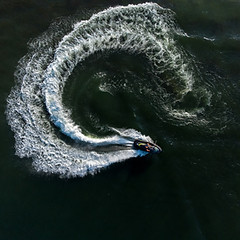
Large, arcing turns send wakes in all directions, rapidly deteriorating riding conditions. On a narrow lake like Windermere, this is considered poor etiquette. If a rider falls, whether on a tube, waterski, wakeboard, kneeboard, or surfboard, shift to neutral, let your wake pass, then execute a tight, slow 180-degree turn back along your original path. Bold power turns, once trendy, are outdated and unappreciated, much like fluorescent speedos from the '80s!
Tubing Protocol & Safety
Tubing is a beloved activity for all ages, but it carries unique risks. With no control, riders depend entirely on the driver and water conditions. A driver’s judgment can launch riders at high speeds, leaving gravity to dictate the landing.

Gentle Maneuvers
Use easy S-turns while traveling north or south, allowing riders to enjoy crossing the wake without being ejected.

Avoid Dangerous Turns
Refrain from 360-degree turns. Drivers must focus forward, using mirrors to monitor riders, avoiding hazards to both riders and other boaters.
Appropriate Boat Types
Lake Windermere’s size and depth dictate suitable boat choices. A 23-foot surf boat is considered large here, and anything larger poses challenges.

Size Limitations
Boats exceeding 23 feet are difficult to launch or retrieve during low water levels, especially early or late in the season.

Draft Considerations
Wake boats require more depth due to their larger draft, while pontoon boats over 23 feet are less restrictive and easier to navigate. The maximum draft for Lake Windermere is 32 inches. We recommend confirming this with dealers when purchasing.

Prohibited Vessels
Houseboats and boats with heads (bathrooms) are unsuitable for this lake.
Expert Resources
Enhance your boating skills with articles from local experts Christine and Mike DuBois. With 26 years owning Shadybrook Resort & Marina and running a water-sports school, they’ve coached hundreds as WaterSki Wakeboard Canada Coaches. Christine also facilitates coach training for the organization. As avid lake users, their expertise will guide CVBA members toward better boating practices. We eagerly anticipate more contributions from the DuBois to enrich our community knowledge.